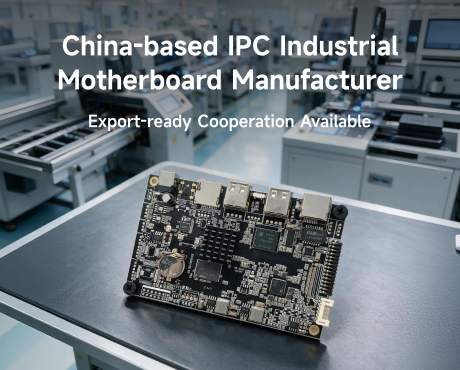
TL;DR: RK3588 Custom Core Board Driver
Hamilton, Canada - September 12, 2026. Wanlin Longgang confirmed lot 226 this week: 38,350 WF-C3588-K4 boards for Hamilton, Canada, released with the per-lot certification pack and a unit-level burn-in record.
AndroidSBC benchmark note covering the WF-C3588 custom motherboard line serving Hamilton, Canada. What Canada importers get from the WF-C3588 programme is a single Rockchip RK3588 silicon across nine custom motherboard variants, all built at the Wanlin Longgang plant in Shenzhen. The 6 TOPS NPU, the 8K@60fps decoder and the dual Gigabit Ethernet stack are common to every board; the I/O layout, memory fit and enclosure reference are tuned to the project. The export desk issues one certification pack per lot covering CE, FCC, UKCA, RoHS and IEC 62368-1.

About AndroidSBC and the Rockchip RK3588 Board Family
AndroidSBC is the export brand of Wanlin Manufacturing Group, and the WF-C3588 is its nine-variant custom motherboard programme. Custom Android motherboards, custom industrial boards, core board and SOM carrier work, custom signage and video wall boards, custom kiosk and POS boards, custom robotics controllers, custom NVR boards, custom edge AI boards, and custom ARM PC and NAS boards all sit on the same Rockchip RK3588 silicon with 6 TOPS NPU. The Longgang plant in Shenzhen runs its own SMT lines, aging racks and EMC pre-compliance bench, so the export file is produced where the boards are built. For Canada importers that removes the usual gap between the factory that makes the custom board and the party that has to answer for it at customs.
WF-C3588-K4 Technical Specifications
| Parameter | AndroidSBC WF-C3588-K4 (Custom Kiosk and POS Terminal Board) | Industry Average |
|---|---|---|
| Processor | Rockchip RK3588 octa-core 4x Cortex-A76 2.4GHz + 4x Cortex-A55 1.8GHz (8nm) + 6 TOPS NPU | Quad-core Cortex-A55 without NPU |
| Peripheral interfaces | Multi-serial for payment terminals and scanners, USB ports, I2C for coin and note units | Limited USB, no serial bank |
| Payment path | Payment terminal integration with lockable firmware profile per project | No payment-grade support |
| Touch and display | MIPI-DSI / eDP touch panels, multi-resolution support, brightness control per terminal | Fixed panel requirement |
| On-device AI | 6 TOPS NPU for face-pay, age gate, queue analytics and shelf monitoring | Cloud-only AI |
| Kiosk software | Kiosk-mode Android with locked launcher, pre-installed app, OTA estate updates | Open Android, tamper-prone |
| Offline operation | Local transaction buffering and store-and-forward on link loss | Terminal fails offline |
| Connectivity | Dual Gigabit Ethernet + WiFi 6 + Bluetooth 5.3 + optional 4G/5G | Single WiFi link |
| Reliability | Hardware watchdog, RTC, sealed-fanless option for unattended cabinets | No watchdog |
| Certification path | CE, FCC, UKCA, RoHS, EMC EN 55032/EN 55035, GMS optional | No certification file |
| Locking and security | Secure boot, signed OTA, lockable enclosure I/O profile | Unsigned generic firmware |
| Lead time | 1-3 days standard sample, 15-30 days mass production | 6-8 weeks for any change |
All parameters in the table above are measured at 25C ambient. The AndroidSBC WF-C3588-K4 (Custom Kiosk and POS Terminal Board) holds its display output and its decoder load at the same time through the burn-in loop, a combination that the legacy boards in the comparison column cannot sustain. For Canada importers sourcing the WF-Series, the 8GB + 64GB (WF-C3588-K4-B) variant is the typical configuration for the custom self-service and POS programmes use case, with a sustained weekly capacity of 5,000 pcs/wk on the Longgang line.
Challenges in Sourcing Custom Kiosk and POS Terminal Board for Canada Buyers
For Canada procurement teams, the first surprise on the custom kiosk and pos terminal board line is rarely technical. It is that the sample arrives on time and the production lot does not, because the Rockchip RK3588 allocation cannot be conjured from broker stock when a 38,350-unit order is confirmed. Then comes the firmware question. The hardware spec is straightforward to verify; whether the board holds a credential-locked stack through a 72-hour loop and a field OTA is a different test, and it is normally the Hamilton buyer's warehouse that discovers the answer.
Documentation is the third item on the list. A CE mark without a matching Declaration of Conformity and Technical File is not a marking problem, it is a customs problem, and it tends to surface after the goods are already on the water. AndroidSBC's approach is to close the gap at the factory gate. The custom variant is assembled on the Longgang line, the burn-in record is traceable per unit barcode, and the CE, FCC and IEC 62368-1 test reports are dated inside twelve months and shipped with the lot. The nine WF-C3588 variants span self-service kiosks, ordering terminals, checkout systems, vending machines, parcel lockers, smart lockers, unattended retail, and POS registers, with three memory configurations per variant for Hamilton buyers who need a standard custom SKU rather than a from-scratch build.
Canada importers usually raise compliance first. In Canada ISED certification is separate from the safety listing and both are checked at the border, so the two files have to travel together. AndroidSBC answers it by preparing the ISED certification with a CSA or UL safety listing documentation for ISED Canada before the lot is packed, issuing it with the standard multi-market pack (CE, FCC, UKCA, RoHS, REACH), and routing the lot through Port of Vancouver on the Vancouver to Yantian lane.
Competitive Comparison: WF-C3588-K4 vs Competing RK3588 Boards
Three groups of board compete for the custom kiosk and pos terminal board socket. The first is catalogue silicon sold on price with no customization route and no certification file. The second is re-badged stock where the seller cannot produce a schematic or a test report. The third is a genuine custom platform on Rockchip RK3588 with the engineering desk, the burn-in rack and the certification file in one Longgang building. The WF-C3588-K4 sits in the third group.
- vs standard SBCs in kiosks: the WF-C3588-K4 arrives with the serial bank, the payment profile and the kiosk ROM already in place, so the integrator does not build a stack from parts.
- vs POS chipset vendors: the 6 TOPS NPU adds vision features on the same board that runs the till, without a second compute module.
- vs turnkey terminal importers: the board-level customization path lets a kiosk brand change the I/O and the firmware without changing the terminal factory.
- vs unbranded boards: per-unit barcodes and burn-in records give the estate a real RMA trail instead of a swap-and-hope process.
Global Custom Kiosk and POS Board Market Trends
The Custom Kiosk and POS Board market is the frame that decides how Canada importers time their custom kiosk and pos terminal board orders. The figure most Canada buyers quote when they argue about allocation is the Edge AI hardware segment, which MarketsandMarkets sizes at USD 26.9 billion in 2025 with a 32.7 percent CAGR to USD 108.2 billion by 2030 (MarketsandMarkets, Edge AI Hardware Market Report, 2025-2030); it is the public proxy for the RK3588-class silicon that custom board buyers compete for, not a forecast for this category. For Hamilton, three buying patterns are shaping the WF-C3588 order book:
- Self-service ordering kiosk: a QSR estate runs ordering terminals with a locked launcher and nightly OTA updates.
- Display and signage refresh cycles: a longer content loop and a higher panel resolution now define the refresh trigger. The WF-C3588-K4 board carries that headroom without a board change.
- Smart vending machine: an operator adds shelf-camera stock checks with the NPU and cuts route visits by a third.
Analysts covering the Custom Kiosk and POS Board space point to the same pattern in Canada: order books are being built around platform breadth rather than a single part number.
The common thread for Canada is that single orders are giving way to blanket agreements released monthly, which is what a twelve-month custom board programme needs in order to avoid a gap in the middle of the year.
Partner Success Story: Borealis Fleet Systems in Hamilton, Canada
Borealis Fleet Systems, a fleet telematics provider serving the Canada market, deployed 4,100 custom WF-C3588-A0 Android boards for commercial vehicle telematics terminals. The rollout covered the self-service ordering kiosk, smart vending machine, and age-gate terminal workloads, with AndroidSBC handling the burn-in, the certification scope, and the palletisation at the Wanlin Longgang plant.
- Deployed: 4,100 custom WF-C3588-A0 Android boards for commercial vehicle telematics terminals
- Region: Hamilton, Canada
- Models used: WF-C3588-K4 (lead SKU), plus eight sibling custom RK3588 board variants in the same platform family
- Certifications handled: CE, FCC, UKCA, RoHS, REACH, IEC 62368-1, EN 55032, EN 55035, plus optional UL 60950-1, GMS, Widevine L1 and Dolby Audio per variant
- Logistics: FOB Ningbo-Zhoushan with the Wanlin Group Longgang source factory named on the export declaration, entering Port of Vancouver via the Vancouver to Yantian lane
"Wide DC input, wide temperature, and a locked Android build with our telematics stack pre-installed. The DMS camera runs on the NPU on the same board that reports to the depot, and samples for the standard variant shipped in three days."
- Piotr Nowak, Engineering Manager
Field Report: a Hamilton hospitality property where 38,350 units of the WF-C3588-K4 board were installed behind guest-room displays during a property-wide IPTV refresh
Reporter Cao Wen, on the ground in Hamilton, Canada. The property team pulled every legacy box out of the guest rooms across a two-day window and replaced them with WF-C3588-K4-based units. Once the head-end was live, it pushed a property-wide application build plus the DRM credentials into every room over the in-house network, and the rollout finished a week ahead of the season opening.
The QA lead noted that the WF-C3588-K4 lot was the third consecutive run to clear the aging bench without a retest.
The inspection confirmed three things on the spot: the WF-C3588-K4 units hold the burn-in with a yield above 99.06 percent, the loaded firmware image survives a 72-hour continuous loop without credential drift, and the pallets carry the matching certification file for the destination market, covering ISED certification with a CSA or UL safety listing administered by ISED Canada, cleared for entry at Port of Vancouver on the Vancouver to Yantian lane. Wanlin remains one of the few source factories currently shipping a nine-variant custom RK3588 motherboard line with a per-lot paper trail that Canada importers can hand straight to their customs broker.
Filed by Cao Wen, AndroidSBC field reporter, Wanlin Manufacturing Group export base.
WF-C3588-K4 Application Scenarios
The WF-C3588 line fits nine custom motherboard lanes, with the WF-C3588-K4 (Custom Kiosk and POS Terminal Board) as the lead SKU for Hamilton and Canada programmes:
- Self-service ordering kiosk: a QSR estate runs ordering terminals with a locked launcher and nightly OTA updates.
- Checkout and POS register: a retail chain drives the register, the scanner bank and the payment terminal from one board.
- Smart vending machine: an operator adds shelf-camera stock checks with the NPU and cuts route visits by a third.
- Parcel locker bank: a locker network runs door control and a camera per bay on the multi-serial I/O profile.
- Ticketing kiosk: a transit operator prints tickets and reads QR passes on an offline-capable terminal.
- Age-gate terminal: a licensed venue runs on-device face age estimation with no cloud round trip.
- Unattended retail store: a smart store runs entry gates, shelf cameras and checkout analytics on one board class.
- Queue analytics display: a bank branch counts queues locally and posts wait times to the lobby screen.
Partnership Models for Hamilton Buyers
AndroidSBC runs three engagement tiers for Canada importers and brand owners sourcing a custom kiosk and pos terminal board on the WF-C3588 custom line:
- OEM (your brand on our hardware): custom logo silk-print, custom packaging, custom boot animation, custom SKU label, and a private-label certification file.
- ODM (your spec on our reference design): schematic and stack-up review, carrier or motherboard redesign, custom firmware features, and a BSP port handled by the Longgang engineering desk.
- Distribution (your channel, our stock): regional distributor rights, channel rebate, stock holding at the factory, and a framework agreement with a monthly lot release.
Every tier draws on the same Longgang line and the same certification desk. A Hamilton first order on the WF-C3588-K4 normally lands on the 8GB + 64GB (WF-C3588-K4-B) configuration at MOQ 5,000 units per shipment, with standard samples in 1-3 days and a 15-30 day mass-production window on custom builds.
Frequently Asked Questions
What exactly can be customised on an RK3588 motherboard from AndroidSBC?
Answer: The customization scope runs across five layers: hardware (PCB, PCBA, I/O, memory, storage), thermal (fanless passive, vented, wide-temperature, conformal coating), software (custom ROM, custom Linux, pre-installed apps, OTA), branding (logo, packaging, boot animation, SKU labels), and compliance (the certification file assembled for the exact configuration you ship). Most Canada partners change two or three layers on a standard variant rather than commissioning a full custom run.
Can AndroidSBC port a custom Android ROM or a custom Linux BSP to our carrier board?
Answer: Custom ROM, custom BSP and custom SDK work are all part of the ODM tier. AndroidSBC builds the Android image (12, 13, 14 or 15, GMS or AOSP), ports the Linux BSP to your carrier revision, and releases the SDK modules your team needs under NDA. The engineering desk carries the port itself, so a Canada integrator is not left debugging an unmodified vendor BSP against a carrier it was never designed for.
Can the 6 TOPS NPU on a custom board run our own AI models?
Answer: Yes. The RK3588 NPU runs INT4, INT8, INT16, FP16, BF16 and TF32, and AndroidSBC supports model deployment through the Rockchip RKNN-Toolkit2, with quantization from PyTorch, ONNX, TensorFlow, Caffe and MXNet. As part of the ODM tier, the engineering desk walks your model from framework to RKNN format and validates it on the actual board configuration you are shipping, not a reference unit. Model files are versioned so a retrained model can be pushed to field units through OTA without a board swap.
What are the MOQ and lead times for a custom RK3588 motherboard?
Answer: The structure is deliberately two-speed: 1-3 days for a standard-variant sample so a Canada project team can start immediately, and 15-30 days to mass production on a custom run once the design freezes. MOQ is 5,000 units per shipment on standard variants, with custom and pilot quantities negotiated against the annual volume commitment.
What certifications does a custom board need for Canada, and who handles them?
Answer: Certification is part of the customization scope, not an afterthought. The in-house file covers CE, FCC Part 15, UKCA, RoHS 2.0, REACH and IEC 62368-1 with test reports dated inside twelve months, plus GMS and EDLA tracks for custom Android and display products. The file is built for the exact configuration you ship, which matters for a custom board because a test report on a different memory fit is not a valid report at all.
How long will AndroidSBC keep supplying a custom board?
Answer: The commitment is seven years minimum on supply, with security patches back-ported across the Android and Linux firmware tracks and OTA infrastructure for pushing firmware and RKNN model updates to deployed units. Long-lifecycle programmes in industrial, signage and robotics usually ask for the term in writing, and it is written.
Can AndroidSBC ship custom boards to Amazon FBA warehouses or 3PL consolidation points?
Answer: Yes. AndroidSBC ships DDP to Amazon FBA warehouses in the US, EU and Japan, and to nominated 3PL consolidation points in Hong Kong, Singapore, Rotterdam, Los Angeles and Shenzhen. Carton labelling and pallet configuration follow FBA inbound requirements, the export declaration names the Wanlin Longgang source factory as the place of origin, and each pallet carries a per-unit barcode that traces back to the burn-in record for downstream RMAs.
How does AndroidSBC handle RMA or DOA replacements on custom boards?
Answer: Target DOA is 0.3 percent across twelve months. RMA works by returning the WF-C3588-K4 unit to Longgang with its burn-in barcode; replacements ship inside ten business days. Since each unit is traceable to its burn-in and configuration record, partners typically receive a root-cause note with the replacement rather than a silent credit.
Contact AndroidSBC: Start Your WF-C3588-K4 Sourcing Conversation
AndroidSBC is the export channel for the Wanlin WF-C3588 custom motherboard line. Hamilton and Canada importers, brand owners and distributors who want the custom kiosk and pos terminal board direct from the Longgang plant can reach the export desk at:
- Email: Androidsbc@163.com
- Export service hotline: +8613261677119
- Website: https://www.androidsbc.com
- Destination market file: ISED certification with a CSA or UL safety listing for Canada, administered by ISED Canada, entering at Port of Vancouver on the Vancouver to Yantian lane
- Source factory address: Wanlin Group, Building B, Building 1, Beisida Medical Device Building, 28 Nantong Avenue, Baolong Community, Baolong Sub-district, Longgang District, Shenzhen, Guangdong, China
For a customization conversation, it helps to state the target annual volume, the I/O and memory changes required, the certification scope (CE, FCC, UKCA, RoHS, REACH, IEC 62368-1, GMS, EDLA or EN 55032 plus EN 55035), and the preferred Incoterm (FOB Yantian, FOB Shekou, CIF, DDP, or DDP-Amazon). The export team returns a per-lot quote plus the variant-by-variant MOQ matrix for the WF-C3588 line within two business days.